
Jainnher Machine Co., Ltd. was established as a professional cylindrical grinder manufacturer. Jainnher specializes in CNC cylindrical grinding machines and provides superior and precision cylindrical grinders for multiple applications. We offer innovative design, high rigidity, high accuracy, high efficiency, guaranteed quality. We are always ready to give you the best solutions to your cylindrical grinder needs. Jainnher team has a broad range of expertise which allows us to provide our clients with CNC cylindrical grinding machine.
What is a cylindrical grinder?
A cylindrical grinder is a precision grinding machine designed to grind the outside or inside surfaces of cylindrical workpieces. It uses a rotating abrasive grinding wheel to remove small amounts of material and achieve accurate dimensions, consistent geometry, and a smooth surface finish.
Cylindrical grinders are commonly used when machining requires a higher level of precision than conventional turning or milling can provide. Depending on the machine configuration, the workpiece may be supported between centers or held in a chuck while the grinding wheel removes material from the surface.
What does a cylindrical grinder do?
A cylindrical grinder removes material from a rotating workpiece to improve its size, shape, roundness, and surface finish. The process is generally used as a precision finishing operation after other machining processes have brought the workpiece close to its final dimensions.
Typical operations include grinding shafts, pins, sleeves, bearings, and other cylindrical components. By controlling factors such as grinding wheel speed, workpiece rotation, feed, and depth of cut, manufacturers can achieve consistent results across multiple parts.
What is a cylindrical grinder used for?
Cylindrical grinders are used to produce precise cylindrical surfaces on components that require accurate dimensions and good surface quality. Common applications include shafts, pins, bearings, bushings, rollers, and other round components used in industrial machinery.
For example, a manufacturer may use a cylindrical grinder to finish the outside diameter of a shaft after turning. The grinding operation removes a small amount of material to bring the shaft to its required size and improve the final surface finish.
What are types of cylindrical grinders JAINNHER provide?
Comprehensive Precision Grinding: JHU, JHA, JHP & CNC Cylindrical Roll Grinding Machine
Jainnher Cylindrical Grinders are engineered for high-precision outer diameter (OD) grinding, efficiently processing cylindrical, conical, shoulder end-face, and complex workpiece geometries. Unlike centerless grinders that rely on a work rest blade, these machines secure the workpiece between centers to achieve exceptional concentricity and accuracy.
To meet diverse manufacturing requirements, our cylindrical grinder portfolio includes:
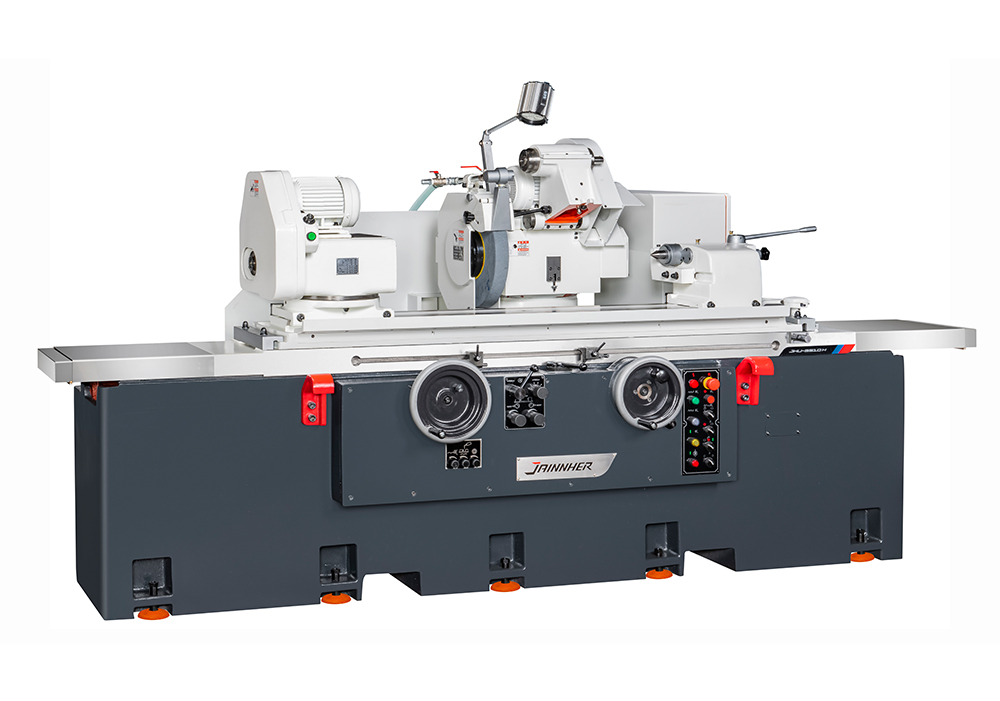
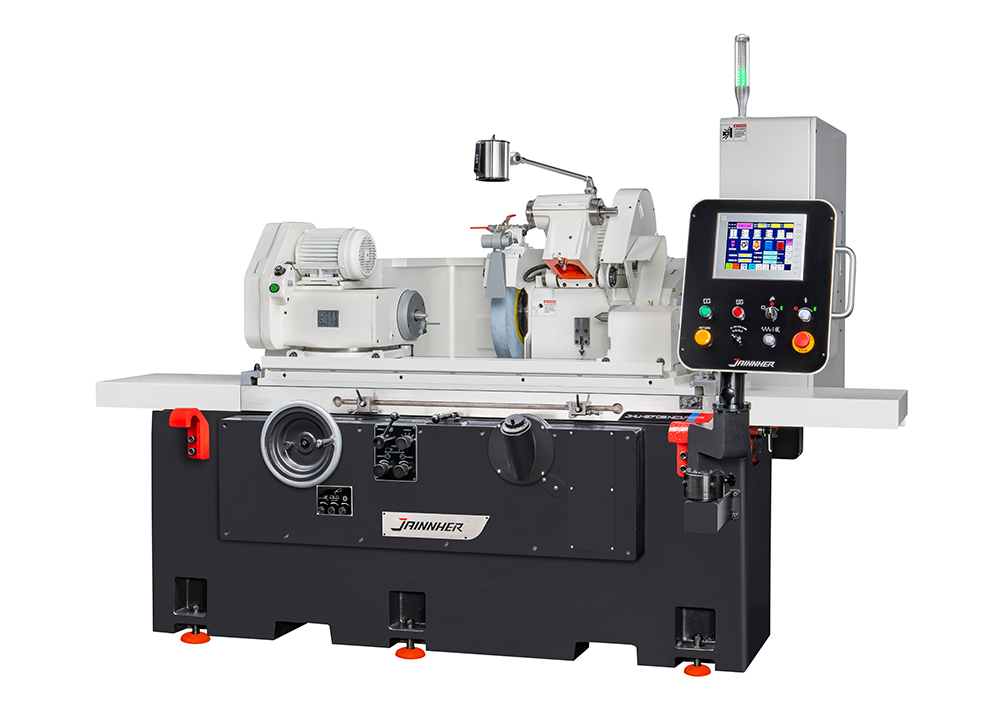
JHU Cylindrical Grinding Machine Series
Ideal for general OD grinding, available in Manual, NC, and CNC control models. Universal configurations can be equipped with an optional internal grinding attachment to handle internal diameter (ID) and internal taper grinding in a single setup.
The Jainnher JHU Cylindrical Grinding Series is categorized into:
- JHU-27 Series: Grinding Diameter: 250 mm | Grinding Length: 600–2000 mm
- JHU-35 Series: Grinding Diameter: 330 mm | Grinding Length: 600–2000 mm
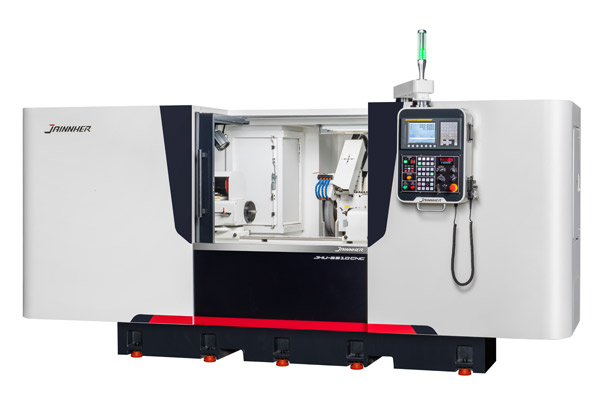
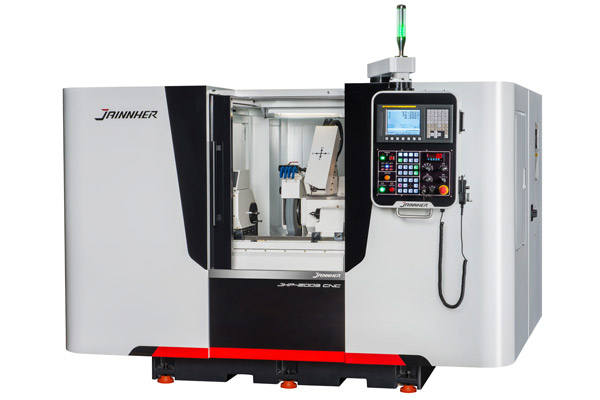
JHA Angular & JHP Plunge Cylindrical Grinding Machine Series
High-precision CNC-controlled models designed for production efficiency. The JHA Angular Cylindrical Grinding features an angular wheelhead to grind outer diameters and shoulder end faces simultaneously, whereas the JHP Plunge Cylindrical Grinding Series employs a plunge wheelhead for standard cylindrical profiles.
The Jainnher JHP / JHA Cylindrical Grinding Series is categorized into:
- JHP-35 / 40 CNC Series: Grinding Diameter: 330 / 380 mm | Grinding Length: 600–1500 mm
- JHA-35 / 40 CNC Series: Grinding Diameter: 330 / 380 mm | Grinding Length: 600–820 mm
- JHP-2003CNC & JHA-2003CNC: Grinding Diameter: 200 mm | Grinding Length: 300 mm
CNC Cylindrical Roll Grinding Machine
Heavy-duty, high-precision solutions designed for medium-to-large workpieces and industrial rollers (e.g., steel, paper, and packaging industries). Equipped with advanced CNC controls for precise crowning (concave/convex profiles), taper, and specialized roller re-grinding.
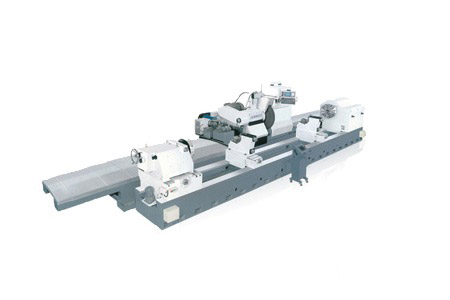
Cylindrical Grinding Process: How Does It Work?
In cylindrical grinding, the workpiece rotates while a grinding wheel rotates at high speed and contacts its surface. Depending on the machine and application, the workpiece can be supported between centers or secured in a chuck, while the grinding wheel moves along or into the workpiece to remove material.
A typical process includes:
- Securing and aligning the workpiece on the machine
- Selecting the appropriate grinding wheel and operating parameters
- Rotating the workpiece against the grinding wheel
- Controlling the grinding feed and depth of cut
- Applying coolant when required to control heat
- Measuring the finished component to verify its dimensions and surface requirements
The exact process depends on the workpiece geometry, material, required tolerance, and production requirements. Proper machine setup and process control are important because excessive heat, vibration, or incorrect grinding parameters can affect the final result.
Which industries use cylindrical grinders?
Cylindrical grinding is used across industries where components need accurate cylindrical surfaces and reliable dimensional consistency. Common applications include automotive, aerospace, medical equipment, tooling, energy, and general precision manufacturing.
Typical examples include:
- Automotive: Shafts, crankshaft-related components, transmission parts, and other precision components
- Aerospace: Precision components requiring controlled dimensions and surface quality
- Medical: Cylindrical components and precision medical parts
- Tooling: Cutting tools and other hardened components
- Hydraulic equipment: Pistons, rods, and precision cylindrical components
- General manufacturing: Pins, rollers, bushings, shafts, and machine components
The wide range of applications makes cylindrical grinders useful for both specialized precision machining and general industrial production.
What are the advantages of cylindrical grinding?
One of the main advantages of cylindrical grinding is its ability to produce accurate dimensions and smooth surface finishes on cylindrical components. It is particularly useful when a component must meet tighter dimensional requirements after turning, milling, or other machining operations.
Other advantages include:
- High dimensional accuracy
- Consistent cylindrical geometry
- Fine surface finishes
- Ability to process hard materials
- Suitable for different component sizes and shapes
- Flexible options for external and internal grinding
- Potential for CNC automation and repeatable production
The final performance depends on the machine configuration, grinding wheel, workpiece material, and process parameters. For manufacturers, selecting a grinder that matches the application is therefore just as important as the grinding process itself.
How accurate is cylindrical grinding?
Cylindrical grinding can achieve very high levels of dimensional accuracy and surface finish, making it suitable for precision components. However, the actual achievable tolerance depends on factors such as machine design, workpiece material, grinding wheel, machine condition, setup, temperature control, and the selected grinding process.
For this reason, manufacturers should evaluate the complete grinding application rather than choosing a machine based only on a stated accuracy specification. A well-designed grinding system combined with appropriate process control can provide the repeatability required for demanding production applications.
JAINNHER, for example, has focused on precision grinding machine development since its establishment in 1982. Its machines are designed and manufactured in-house by its senior R&D and technical teams, with an emphasis on machine stability, process control, and reliable operation.
Cylindrical Grinders vs. Other Grinding Machines
Cylindrical grinders are designed primarily for cylindrical workpieces, while other grinding machines are optimized for different geometries or grinding requirements. The right machine depends on whether the application involves an external diameter, internal diameter, flat surface, centerless component, or another specialized geometry.
For example:
- Cylindrical grinders: Used for precision external or internal cylindrical surfaces
- Internal grinders: Designed specifically for grinding internal surfaces and bores
- Centerless grinders: Grind cylindrical workpieces without using centers to support the part
- Surface grinders: Primarily used to produce precise flat surfaces
- Vertical grinders: Use a vertical grinding arrangement for applications suited to that machine configuration
The distinction is important because each machine type provides different workholding, grinding movement, and production capabilities. Manufacturers should consider the component geometry, required accuracy, production volume, and grinding operation before selecting equipment.
Cylindrical Grinders FAQ
1. What is a cylindrical grinder used for?
A cylindrical grinder is used to grind the external or internal cylindrical surfaces of workpieces to achieve accurate dimensions and a good surface finish. Common applications include shafts, pins, bearings, bushings, rollers, and other precision cylindrical components.
2. What are the main types of cylindrical grinders?
Common types include external cylindrical grinders, internal cylindrical grinders, universal cylindrical grinders, and CNC cylindrical grinders. The appropriate type depends on the surface being machined, workpiece geometry, production requirements, and required level of automation.
3. What is the difference between OD and ID grinding?
OD grinding, or outside-diameter grinding, removes material from the external cylindrical surface of a workpiece. ID grinding, or inside-diameter grinding, is used to finish the internal surface of a hole or bore, usually with a smaller grinding wheel designed to reach inside the component.
4. What is the difference between cylindrical grinding and centerless grinding?
Cylindrical grinding generally uses centers or a chuck to support and position the workpiece during grinding. Centerless grinding does not use centers to hold the workpiece; instead, the component is supported between a grinding wheel and a regulating wheel, which makes the process well suited to certain high-volume cylindrical parts.
5. Can cylindrical grinders achieve tight tolerances?
Yes, cylindrical grinding is commonly used for components that require tight dimensional tolerances and high-quality surface finishes. The actual tolerance that can be achieved depends on the machine, workpiece, grinding wheel, process conditions, and overall production setup.
6. What materials can be processed with cylindrical grinding?
Cylindrical grinding can be used with a wide range of materials, including common engineering metals and harder materials. Depending on the machine and grinding process, applications may include steel, aluminum, titanium alloys, ceramics, and composites.
7. How do I choose the right cylindrical grinder?
Start by evaluating the workpiece dimensions, grinding diameter, grinding length, material, required tolerances, surface finish, and production volume. You should also consider whether the application requires external or internal grinding, manual or CNC operation, automation, and additional process capabilities.
For manufacturers with varied grinding requirements, working with an experienced grinding machine manufacturer can help identify a suitable configuration. JAINNHER has more than 40 years of experience in grinding machine development and offers a broad range of centerless, internal, cylindrical, plunge/angular cylindrical, double-spindle, vertical, and thread grinding machines, supported by in-house engineering and technical teams.